You matched with
Ellie Pezeshki
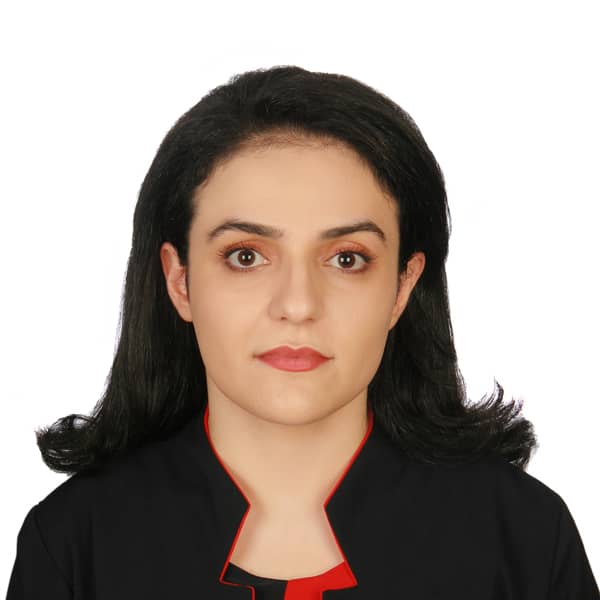
Ellie Pezeshki
Institution
North Carolina State University
Introduction
I’m a PhD candidate in coastal science with a strong interest in water, climate, and sustainability. I enjoy working on real-world problems, especially where science can directly help communities and agriculture. Outside of work, I like staying active, exploring new places, and doing simple things that help me reset—like walking around stores, trying new makeup, or spending time with friends and family.
Top Fields
Earth & Environmental Science, Engineering, Interdisciplinary / Emerging Fields
Research Areas
This mentor can support projects in data science, climate change, flooding, and hurricanes. Their broader interests include climate science, Earth science, environmental engineering, and atmospheric or ocean-related research.
Background
My research focuses on saltwater intrusion and soil salinization in coastal agricultural systems, particularly in Eastern North Carolina. I study how sea level rise, storms, and tidal flooding introduce saline water into farmland through drainage networks and groundwater, and how this leads to long-term soil degradation and reduced crop productivity.
I combine field measurements, laboratory experiments, and numerical modeling. In the field, I use geophysical methods such as electrical resistivity tomography (ERT) and electromagnetic induction (EMI) to map subsurface salinity patterns and identify pathways of salt transport, especially near drainage ditches connected to estuaries.
In the lab, I designed and ran controlled soil column experiments to understand capillary-driven salt movement. These experiments compare homogeneous soils with systems that include a capillary barrier, showing how layering can limit upward salt transport into the root zone.
On the modeling side, I use tools such as MODFLOW (with density-dependent flow), HYDRUS-1D, and SimPEG to simulate groundwater flow and salt transport, and to link hydrologic processes with geophysical observations. I also use Python for data processing, visualization, and integrating datasets.
Overall, my work aims to better understand salt transport mechanisms and develop practical, cost-effective strategies (like capillary barriers) to help protect agricultural soils from salinization under changing climate conditions.