You matched with
Jasper Mark
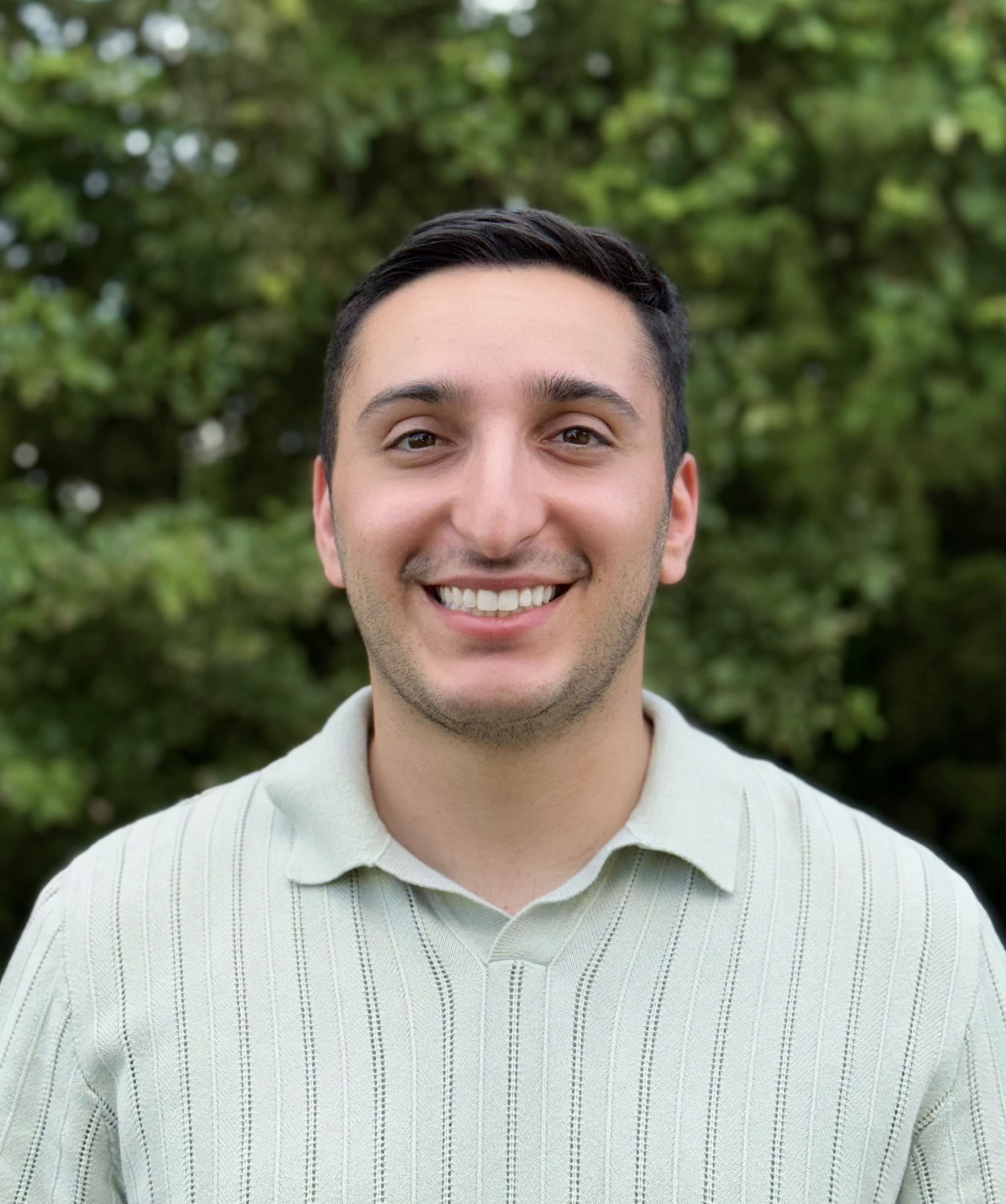
Jasper Mark
Institution
UNC Chapel Hill: School of Medicine Department of Health Sciences
Introduction
Outside of research, I’m an avid fan of documentaries and reality TV, anything that combines storytelling with real-world dynamics tends to pull me in. I also enjoy hiking and traveling, especially exploring new environments and cultures, which gives me a broader perspective beyond my day-to-day work. I like problem-solving in more relaxed settings as well, such as working through Sudoku puzzles. In parallel, I spend a good amount of time building and thinking about startups in the medtech space, where I enjoy translating scientific ideas into practical, real-world applications.
Top Fields
Biology & Life Sciences, Medicine & Public Health, Psychology & Cognitive Science
Research Areas
This mentor can support projects in health sciences, neuroscience, biomedical engineering, exercise science, and psychology. Their interests are especially aligned with student projects that connect neuroscience or health-related questions with biological, behavioral, or engineering perspectives.
Background
My research focuses on developing computational and mechanistic frameworks to understand how dynamic interactions within complex biological systems give rise to behavior and recovery, with a primary emphasis on human neurophysiology and stroke rehabilitation. Broadly, my work integrates multimodal time-series analysis, network neuroscience, and closed-loop experimental paradigms to move beyond static or correlational descriptions of brain function toward causal, adaptive models of neural control.
A central theme of my research is the characterization of nonstationary, multiscale dynamics in brain–body systems. Traditional approaches to functional connectivity often treat interactions as static or averaged over time; however, neural systems are inherently dynamic, with hierarchical dependencies that evolve across temporal and spatial scales. To address this, I have developed computational methods that combine time–frequency analysis, coherence metrics, and cross-frequency coupling to quantify how slow regulatory processes modulate fast motor and neural activity. This work led to the development of phase-modulated corticomuscular coherence (pmCMC), a novel metric that integrates corticomuscular coupling with cross-frequency dynamics to capture hierarchical control processes. In a first-author publication in Neurorehabilitation and Neural Repair (2024), I demonstrated that cross-frequency coupling serves as a biomarker of early stroke recovery, providing a mechanistically interpretable link between neural dynamics and functional outcomes.
My research also contributes to a broader paradigm shift in neurorehabilitation—from correlational biomarkers to causally relevant network mechanisms. In collaboration with leaders in the field, I co-authored work in Brain (2022) arguing that functional connectivity is not merely an epiphenomenon but a driver of recovery processes. This perspective informs my ongoing work examining how structural injury constrains task-based corticomuscular connectivity (Frontiers in Neurology, 2025) and how these network-level interactions relate to behavioral recovery trajectories.
Building on this mechanistic foundation, I am leading projects that explicitly test whether neural connectivity can be modified and trained as a control signal. In a recent study (Restorative Neurology and Neuroscience, 2025), I investigate operant conditioning of corticomuscular coherence using real-time biofeedback. This work integrates high-density EEG and EMG with low-latency signal processing to create a closed-loop system in which participants learn to modulate intrinsic neural connectivity rather than overt behavior alone. By pairing this paradigm with neurophysiological probes such as transcranial magnetic stimulation, the work aims to establish causal links between learned connectivity changes and corticospinal excitability, advancing both theory and therapeutic application.
In parallel, I have contributed to research exploring modulators of functional connectivity, including behavioral and physiological interventions. For example, in PLoS One (2023), I demonstrated that aerobic exercise and action observation priming can modulate functional connectivity, suggesting that network dynamics are both state-dependent and intervention-sensitive. Additional work has examined predictors of rehabilitation outcomes, including self-efficacy (Topics in Stroke Rehabilitation, 2025), further integrating psychological and neural dimensions of recovery.
In addition to my primary work in neurorehabilitation and computational neuroscience, I have conducted research in clinical psychology focused on the neural mechanisms underlying affective and psychotic disorders. This work applies multimodal neuroimaging and non-invasive brain stimulation to better understand—and ultimately modulate—dysfunctional brain network dynamics across psychiatric populations.
Specifically, I have investigated depression and anxiety using a combination of EEG, MRI, and non-invasive neuromodulation approaches (e.g., transcranial electrical stimulation and TMS). This work centers on identifying aberrant functional connectivity patterns within and between large-scale networks (e.g., fronto-limbic and salience networks) and assessing how these patterns relate to symptom expression and treatment response. By integrating neuroimaging with brain stimulation, this line of research moves beyond observation toward probing causal contributions of network dysfunction to affective symptoms.
In parallel, I have contributed to studies examining schizophrenia-spectrum and psychosis-risk populations, including adolescents at elevated clinical risk. Using both EEG and MRI, this work focuses on characterizing disruptions in neural synchrony, oscillatory dynamics, and network organization that emerge during critical developmental windows. A key emphasis has been on identifying early biomarkers of psychosis risk, particularly through measures of altered connectivity and cross-frequency interactions that may reflect impaired hierarchical coordination in the brain.
Complementing my neuroscience work, I have been involved in the development of wearable and digital health technologies aimed at translating physiological signals into actionable feedback. This includes studies evaluating textile EMG sensors for telehealth biofeedback systems (Wearable Technologies, 2025) and engineering work assessing signal integrity in wearable systems (IEEE EMBC, 2025). I am also an inventor on a patent for a wearable biosignal device designed to deliver individualized therapeutic feedback. These efforts reflect a translational focus on scalable, real-world deployment of neurophysiological monitoring and intervention systems.
Methodologically, my work spans advanced statistical and computational approaches, including permutation-based inference for nonstationary data, graph-theoretical analysis of networks, and machine learning models for high-dimensional time series. I have also developed novel recurrent neural network architectures that disentangle short- and long-horizon dependencies in complex signals, improving both predictive performance and interpretability in EEG-based applications.
Overall, my research aims to unify theory, computation, and intervention by treating neural systems as dynamic, adaptive networks that can be modeled, interpreted, and ultimately shaped. By integrating mechanistic insight with real-time experimental control and translational technologies, my work seeks to advance a new generation of biomarkers and therapeutic strategies grounded in the causal dynamics of human physiology.